 English

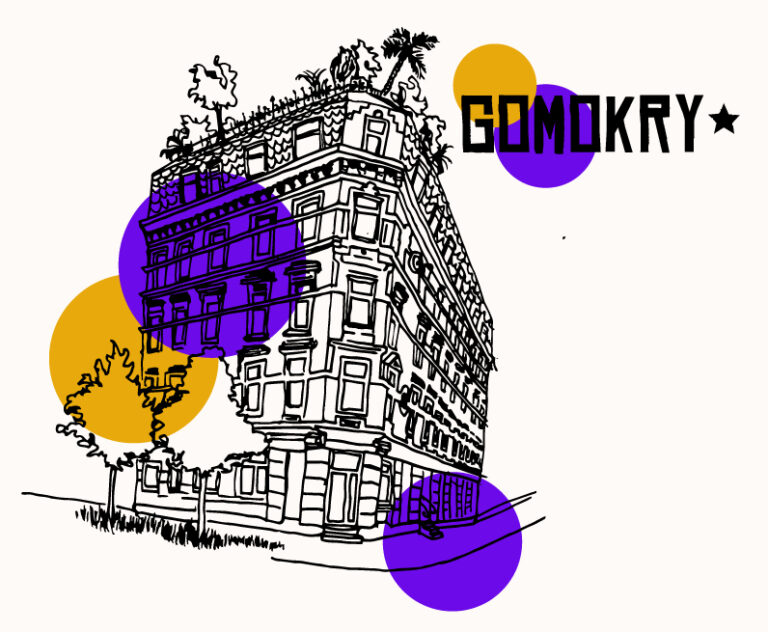
Communal living allows us to turn many of our ideals and ideas about social interaction into reality.
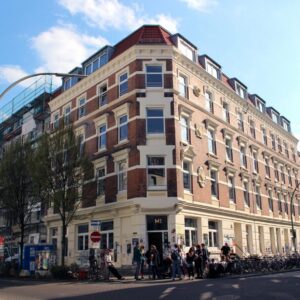
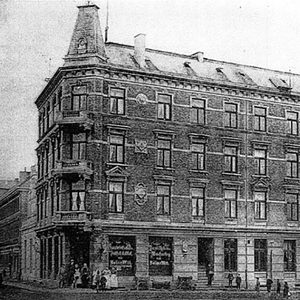
We are a community of over 40 people in Hamburg-Wilhelmsburg who have built a self-determined living environment and are developing and shaping it together. To create a secure, long-term foundation for this, we purchased buildings No. 1 and 3 on Mokrystraße with the help of the Mietshäuser Syndikat, thereby taking control of their design, management, and organization into our own hands.
Our goal is to collectively bring together an equitable and self-organized way of life—encompassing cultural, political, social, and ecological aspects—under one roof. In addition to residential space, we aim to enrich our neighborhood with various offerings in our public spaces on the ground floor, in collaboration with the local community (see M1, the nonprofit association Mokryhuetten.e.V.).
The “Mietshäuser Syndikat”
GoMokry* e.V., together with the Mietshäuser Syndikat, is a shareholder in a limited liability company (GmbH) that owns the building. The Syndikat’s involvement ensures that the sale of the building for the financial benefit of any individual is absolutely ruled out. In this way, our project contributes to the neutralization of ownership in the housing market.
This results in the following benefits for all parties involved:
- Guaranteed low rents for residents for decades to come
- Networking and exchange with nearly 200 successful projects and over 30 project initiatives
- Support and advice based on 30 years of experience, as well as oversight of our financial planning
- Solidarity among the projects, including in financial terms
- Ensuring that the building cannot re-enter the market as a speculative investment
Financing Plan
Our financing is based on the following components, which have proven effective in projects carried out by the Miethäuser Syndikat:
- Direct loans from people who wish to support us, as a medium- to long-term investment opportunity, with up to 1.5% interest on amounts starting at 500 €
- Own Funds
- Lending communities starting at €10 per month per person
- Bank Loans
The entire loan amount is repaid using our rental income. Our financing plan has been thoroughly reviewed by the Mietshäuser Syndikat and GLS Bank.
Would you like to learn more about direct loans, or perhaps you’d even consider supporting us with a direct loan?
FAQ
Why don’t you want to own the house?
Unfortunately, throughout the history of self-managed housing projects, there have been repeated instances in which a group invested a great deal of work, time, and money into building a project, only for the building to be resold years later—whether due to disputes, waning interest, or changes in the participants’ life circumstances—by a small group or even a single individual, often at significantly higher prices. Given the goal of placing the project on a sustainable footing and ensuring that the residents can continue to pay affordable rent, it would therefore be more of a risk if ownership were held exclusively by the housing association. That is why we want to enshrine the structural separation of Hausbesitz GmbH—in which the Mietshäuser Syndikat holds a stake—from the current residents in the legal structure of our operating company.
Can you sell the houses again if it makes financial sense?
No. The Syndicate model includes a minority stake held by the Mietshäuser Syndikat, which grants it a veto right against the sale of the building as well as against any change of use that would no longer be project-based. However, this is not a disadvantage; rather, it guarantees that the project will continue to exist even if a more economically lucrative use of the buildings as private property were possible.
Can individual people leave the project again?
Yes. Of course, it’s always a shame when people decide to leave the group, but the GoMokry* project is designed to be long-term, and individuals’ goals, wishes, and perspectives change over time. Sometimes these can be incorporated into the project and shape it; sometimes they cannot. That’s why all residents receive their own lease. This means not only that we all naturally enjoy the tenant protections enshrined in law, but also that people can move out and others can move in.
Why do you work with the Mietshäuser Syndikat?
For decades, the Mietshäuser Syndikat has successfully supported the planning and implementation of housing projects throughout Germany. This has allowed us to draw on a wealth of expertise and support, particularly during the often complex initial phase of a project. In addition, the legal structure of the syndicate model ensures that the project is permanently protected against reprivatization.
Was passiert wenn Leute im Projekt ihre Miete nicht bezahlen können?
To protect the project against lost rent payments, we have provided for two options. First, we base our financial planning on a rent loss risk of 3 percent. This figure is fairly generous given the realities of the commercial real estate sector, where a rate of just 2 percent is often assumed. This 3% of the base rent is allocated to a buffer fund that can be used to cover any missed rent payments. Additionally, it’s important to note that a housing project becomes a project precisely because we see ourselves as a community based on solidarity. This also means providing concrete support during financial difficulties faced by individuals through cross-subsidization or bridge financing provided by the group. We view housing as a fundamental right and do not want to evict anyone from their home for financial reasons!
What if the group falls apart?
Experience from other housing projects shows that conflict within the group is indeed one of the greatest risks.
As a general rule, we make decisions as a group by mutual agreement. This means that issues are discussed until a (at least minimal) consensus is reached. In addition to a solution-oriented approach from everyone involved, this sometimes requires a great deal of patience.
If no solution at all can be found for a dispute, there is—as a last resort—the option for individual residents to decide to leave the project, since they each have an individual lease with Hausbesitz GmbH that they can terminate if necessary.
What’s it like to live in Mokry?
Mokry brings together many different people with different needs. That’s why there are such a wide variety of living arrangements. In addition to more traditional shared-apartment setups, there are also apartments for individuals and small families. There is also a floor reserved exclusively for FLINTA*s (women, lesbians, inter, non-binary, trans, and agender people, and * all people who do not identify with the terms listed above and are not cis-male) and a functional shared apartment where rooms are assigned not to individual people but to specific functions.
We see ourselves as one big community. That’s why it can happen from time to time that changes in individual residents’ circumstances or needs cause the entire building to undergo changes, and we have to restructure the living units.
Press Clippings & Further Reading
Perspective: The Apartment Building Syndicate Against Rising Rents
NDR Info (Facebook) | February 19, 2019 – an explanatory video about the MHS featuring GoMokry*
Decommodification of Housing (English)
“Diversify Now” Blog (Copenhagen, Denmark) | September 17, 2018
High rents? These young people are building a house in Hamburg—without any money
bento | June 15, 2018 – The Rialto House Project Group was interviewed by bento magazine
One House, 40 Owners—One Year of the GoMokry* Housing Project
Szene Hamburg | October 2017
Housing Project in Wilhelmsburg: “GoMokry*” – Hamburg, Always Different!
TIDE TV | December 1, 2016
Buying Without Capital
taz | July 23, 2016
An Investor with a Heart
Hinz&Kunzt | December 23, 2015
Buying and Renovating for a Building Cooperative
Hamburger Abendblatt | January 31, 2015
Housing Cooperatives – The Friendly Gentrifiers Next Door
Deutschlandfunk Kultur | January 19, 2015
This program features various projects in Hamburg and Berlin. GoMokry* is mentioned toward the end under the heading “A Niche for Self-Determined Living.” Enjoy the show!
Vernetzung
DAW – Dachverband autonomer Hausprojekte in Hamburg
Likedeelerei
Hamburg Syndicate for Solidarity-Based Housing
Eschenhof
Housing project in Hamburg
Gängeviertel
Self-Managed Cooperative & Cultural Space in Hamburg
Rialto Hausprojekt
our sister project next door
Scharni38
Housing project in Berlin
Recht auf Stadt
Network Hamburg
Wilhelmsburg Solidarisch
Neighborhood Assistance in Wilhelmsburg
Sauerkrautfabrik
Self-Managed Center in Hamburg-Harburg
Honigfabrik
Neighborhood Culture for Wilhelmsburg